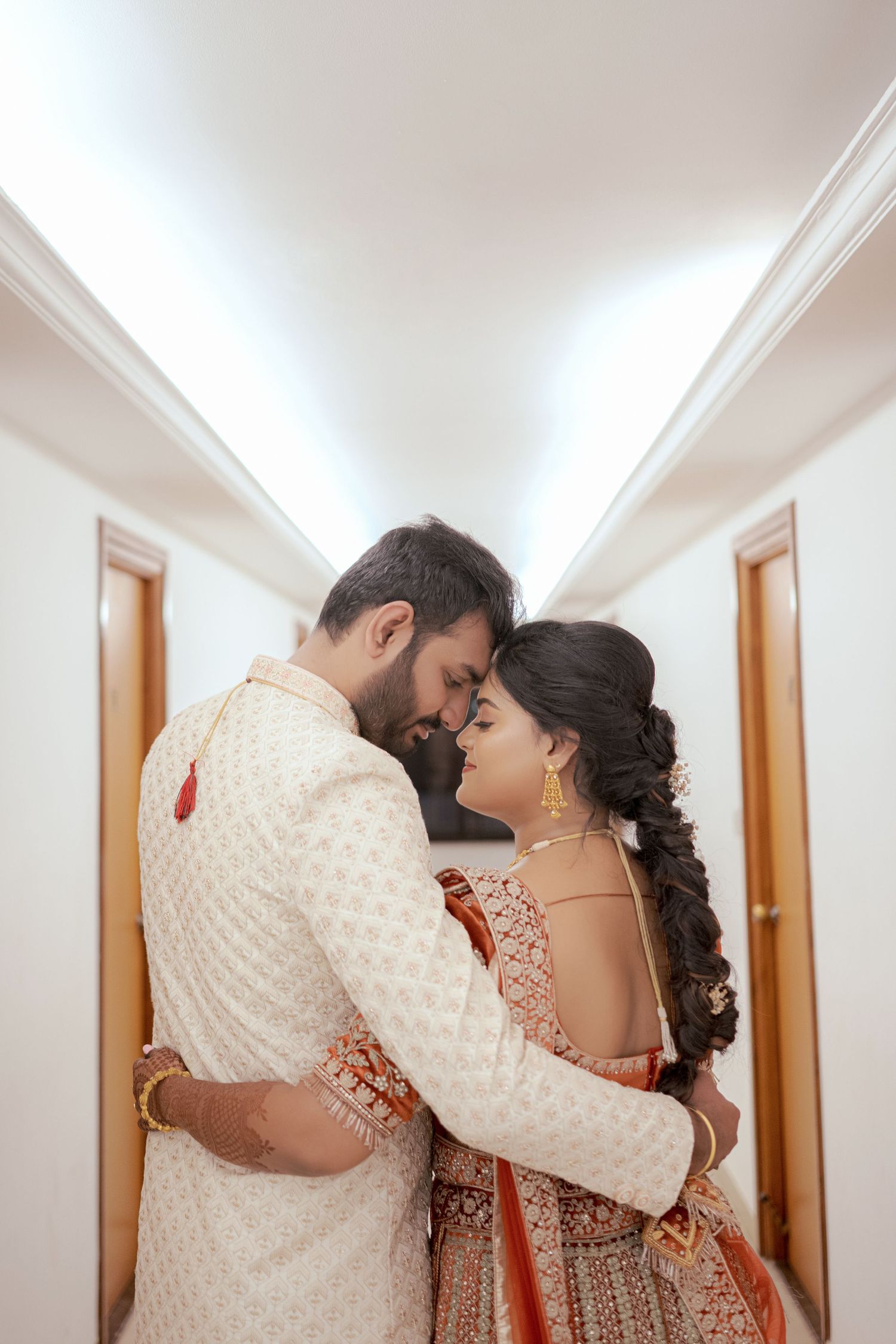
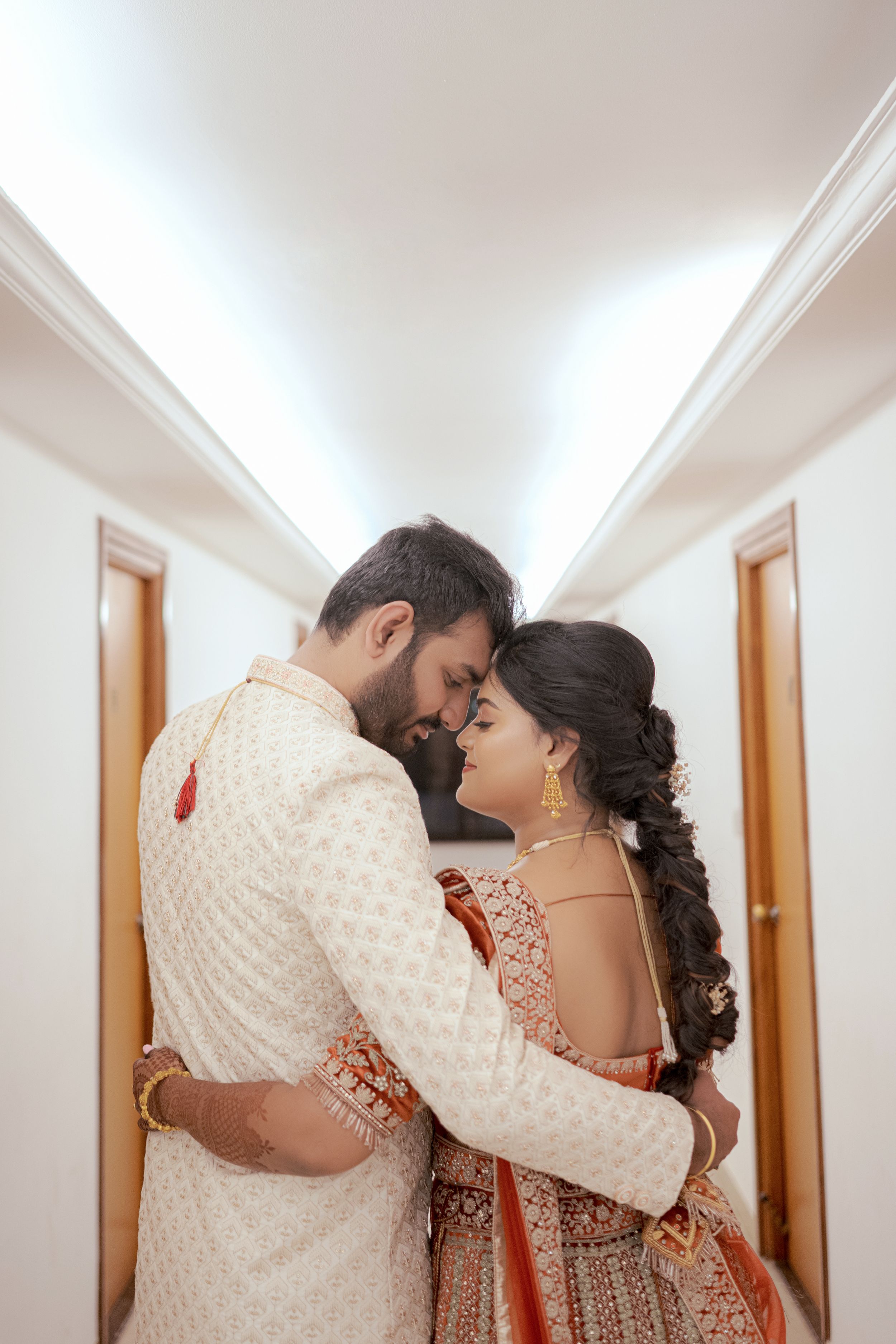
Couples usually come to us asking for "more nature shots" as if greenery were a filter you switch on. It isn't. The trees, the water, the light falling through leaves at 6pm — these aren't backdrops you stand in front of, they're active ingredients that change how a photograph feels. The couples whose wedding albums have that unforced, breathing-room quality are almost always the ones who let the setting do some of the storytelling instead of fighting it for attention.
Here's what that actually looks like in practice, and how to get it into your own wedding photos.
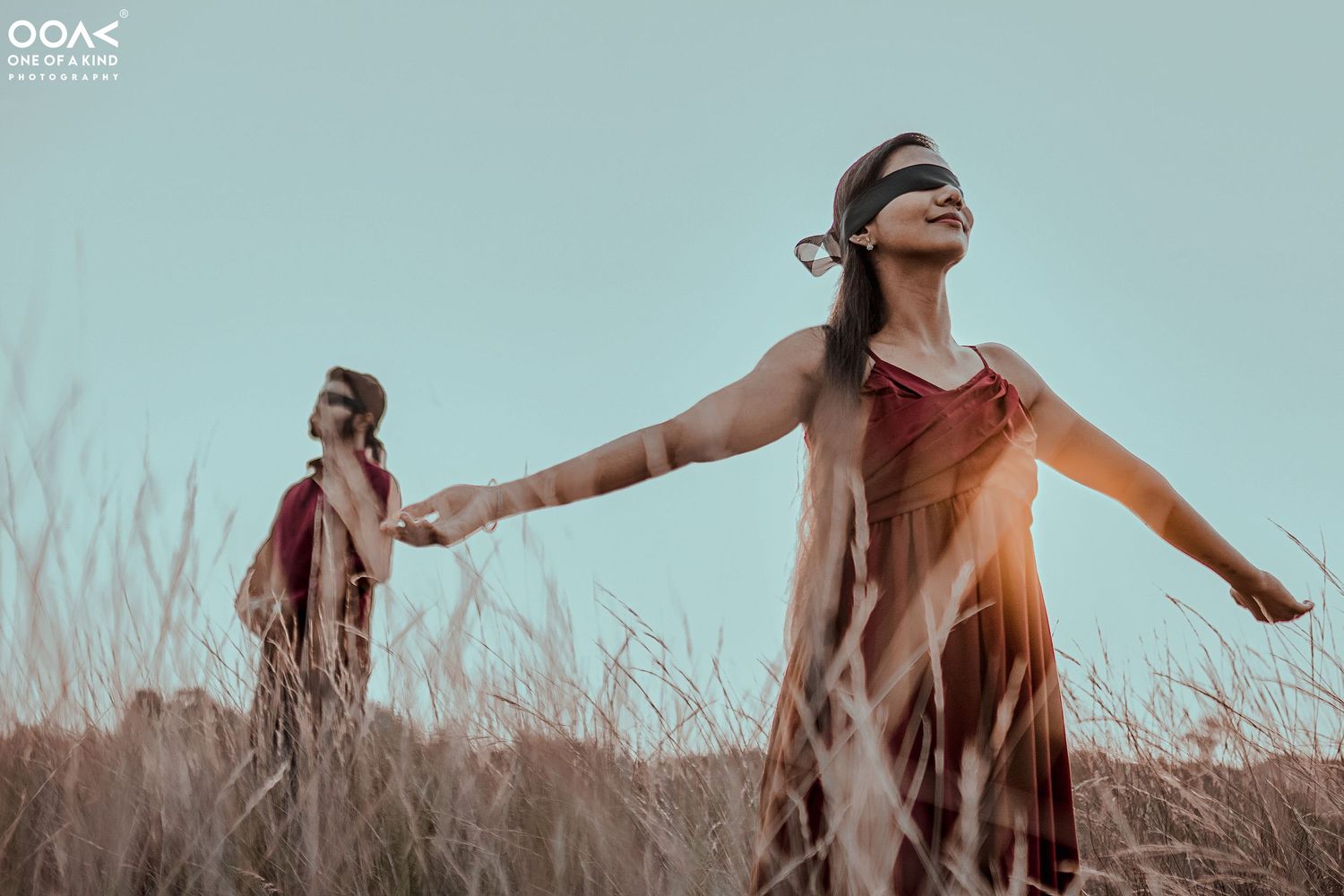
Chase the light, not the location
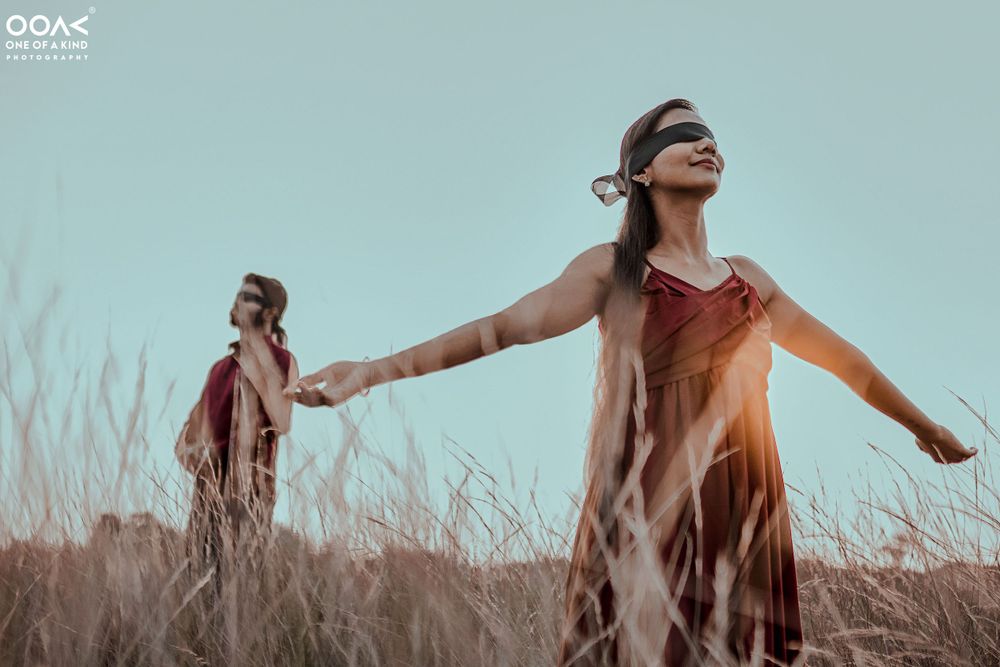
A manicured lawn at noon and the same lawn forty minutes before sunset are two completely different photographs. Direct overhead sun flattens skin tones and forces everyone to squint; the same spot in golden hour turns soft, warm, and forgiving. If there's one piece of advice worth acting on, it's this: ask your photographer to block out a short window around golden hour, even if it means stepping away from the mandap or the reception floor for fifteen minutes. That gap is usually where the most-loved photograph in the whole album comes from.
Overcast days get an unfairly bad reputation. Clouds act like a giant softbox — they diffuse harsh sun into even, flattering light with no hard shadows under the eyes. Some of our favourite outdoor portraits have come from grey-sky mornings that couples worried were "bad weather." Monsoon light in particular has a cool, moody quality that a bright cloudless afternoon can't fake.
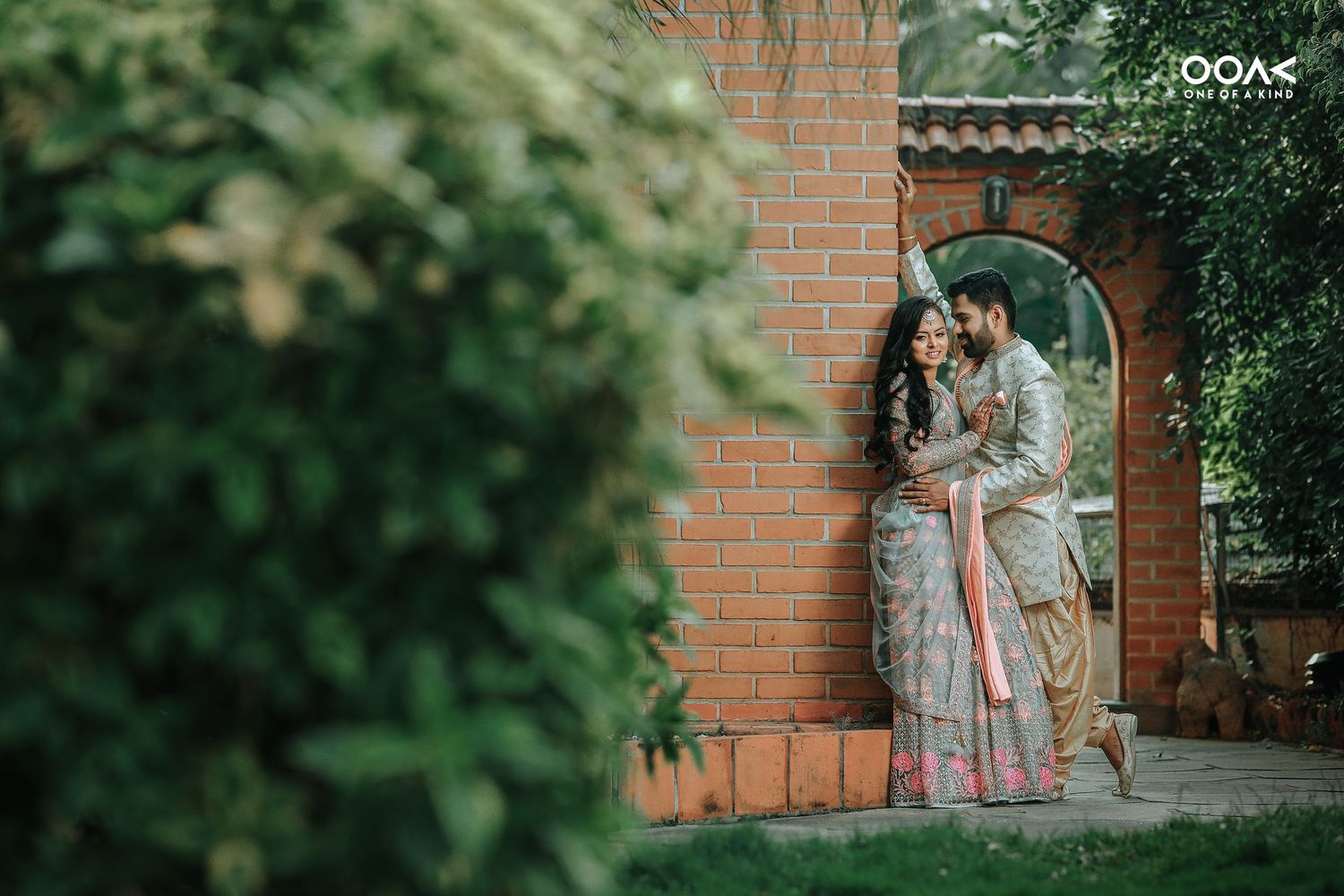
Let the venue's existing features lead
Every venue, even a purely indoor banquet hall, usually has one or two natural elements nearby that get overlooked — a row of old trees near the parking area, a water body, a courtyard with a single strong tree canopy, a stone pathway. Rather than importing decor to manufacture a "nature moment," we walk the venue in advance and note where the real light and the real greenery already are. A single well-placed banyan or gulmohar tree, shot at the right time of day, does more work than an entire flower wall built for a photo.
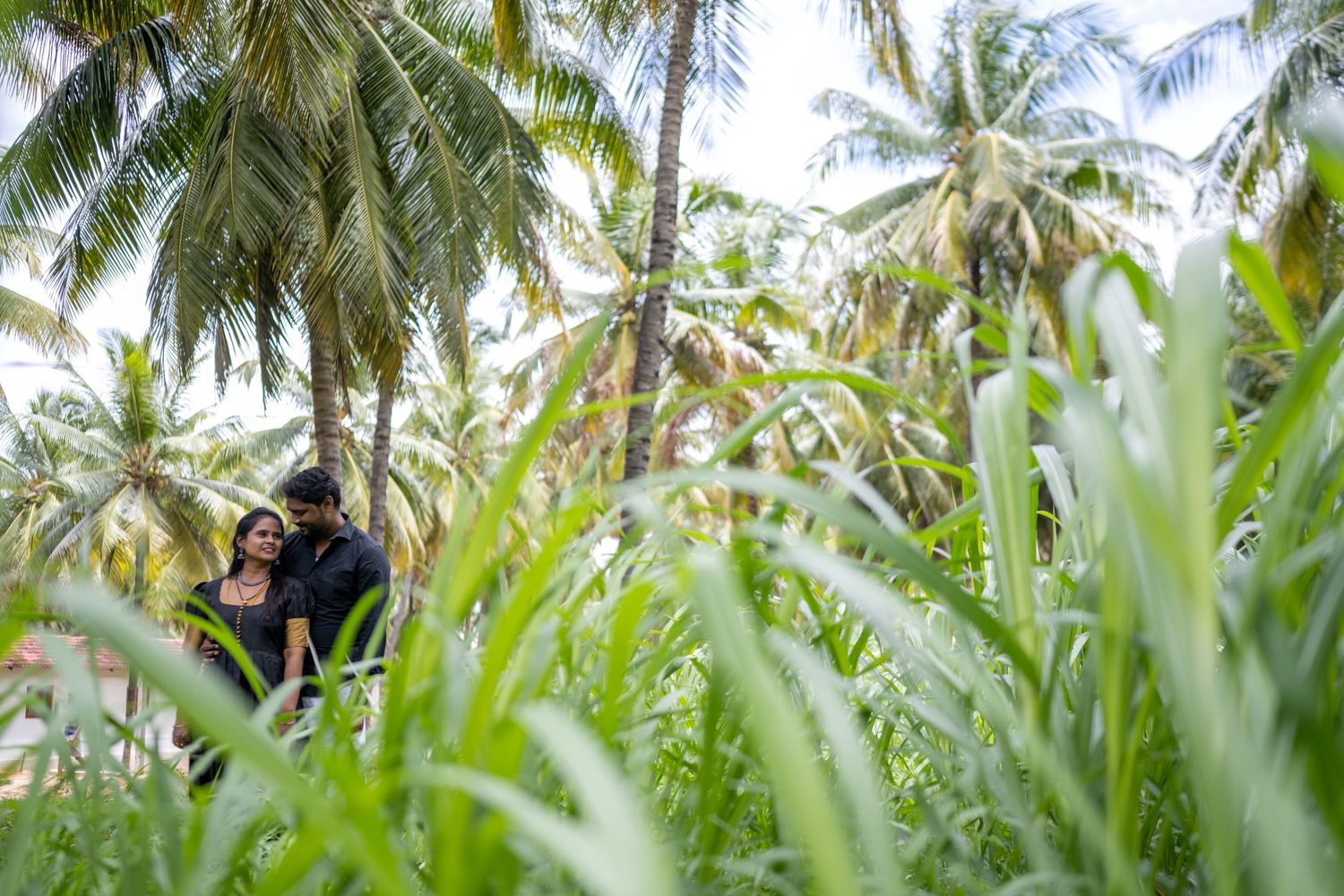
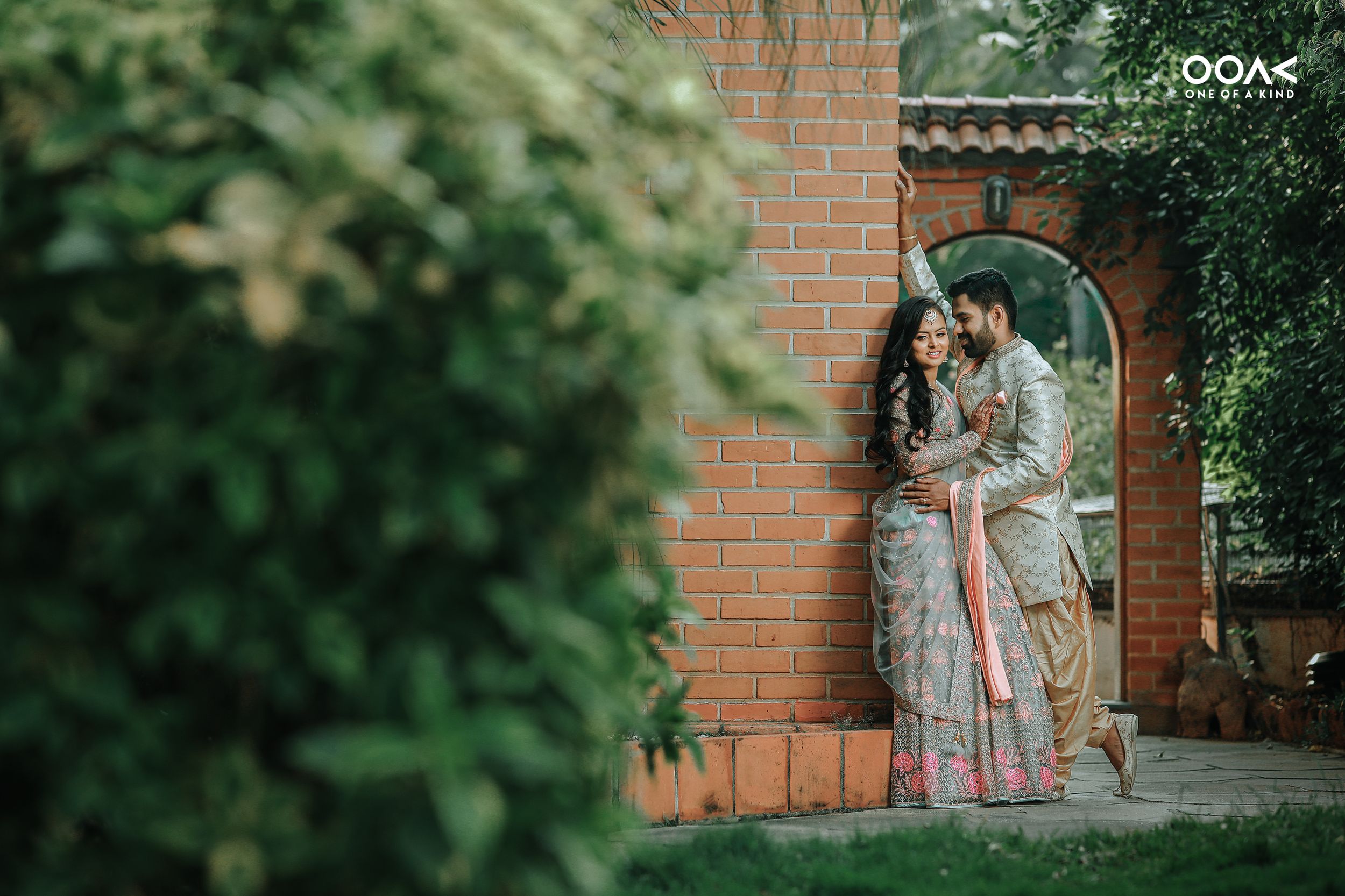
Water is the other underused element. Even a modest ornamental pond or a poolside edge gives you reflections and a horizon line that a plain lawn can't. Framing a couple through foliage — letting out-of-focus leaves sit in the foreground while the couple stays sharp — is a simple technique that instantly adds depth most people don't get from a flat, front-facing portrait.
Movement matters more than props
Wind moving a dupatta, a veil catching light as someone turns, grass brushing against a lehenga hem while a couple walks — these small, real movements read far more naturally on camera than a posed, static stand-and-smile shot. If a breeze picks up during your outdoor session, that's not an inconvenience to wait out, it's usable. We'd rather catch three seconds of natural motion than fifteen minutes of a couple holding a stiff pose against a pretty backdrop.
This is also why we'd rather shoot outdoor portraits as a short, unhurried walk than a fixed studio-style setup. Give the couple somewhere to actually walk — along a path, down a slope, around a tree — and photograph the in-between moments rather than only the stops.
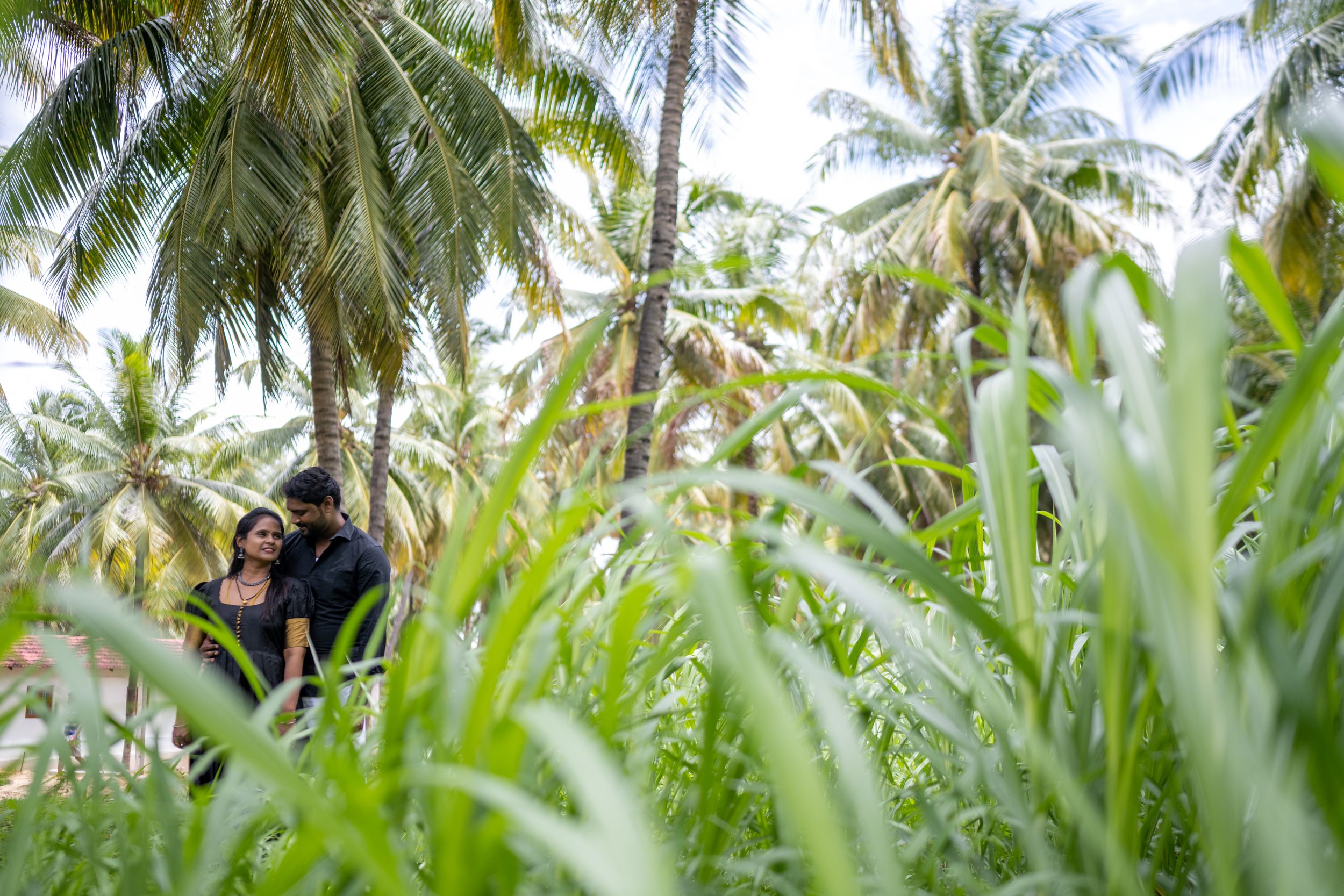
Build it into the schedule, not around it
The single biggest reason nature-integrated shots don't happen isn't the venue or the weather — it's the timeline. If every minute of the day is already accounted for between rituals, hair and makeup touch-ups, and guest arrivals, there's no slot left for a walk to the garden. Tell your photographer up front that you want this, and it gets planned into the day rather than squeezed in as an afterthought. Many couples find it easier to get these shots during a separate pre-wedding session rather than on the wedding day itself, when time is tightest; it's one of the add-ons available across our packages for couples who want a calmer, unhurried outdoor session before the wedding rush begins.
None of this requires an exotic location. A neighbourhood park, a temple tank, a tree-lined street near the venue — the ingredients are usually closer than couples expect. What makes the photographs work isn't the rarity of the setting, it's paying attention to light, letting real movement happen, and giving the moment enough time to breathe.
If you'd like to see how this looks across full weddings we've shot, browse more of our work in the gallery — and if you're planning your own, we're happy to talk through what your specific venue has to work with.